Tuesday, December 21, 2010
Plant Nutrient Deficiencies, HS 26
Erik Biksa discussing common plant nutrient deficiencies in hydroponics and organic crops.
Video Duration: 0:06:00
To join the revolution for bigger yields, check out the Growers Underground!

Friday, November 12, 2010
Water Farm Hydroponics Use Massive Reservoirs Connecting Multiple Growing Units

Water farm hydroponics is definitely the best facility large business owners could use for extensive soilless cultures. Hydroponic systems all function on the same basis with the only mention that according to plant growing extension, the size of the system has to be adjusted properly.
To join the revolution for bigger yields, check out the Growers Underground!
This is the case of the water farm hydroponic system that includes very large reservoirs and several growing units connected with the help of a controller that keeps them all balanced in terms of nutrient solution. The important thing is that this system, though mainly devoted to large users, can very well be organized so as to occupy as little space as possible at home.
Size variations
The main constituent in the hydroponic system is the reservoir, since without enough space to keep the nutrient solution, you can’t develop a large culture. The biggest water farm hydroponics systems use reservoirs as large as thirty-five gallons, and there are several producers that manufacture this size: for instance American Hydroponics.
Another company that designs water farm hydroponic systems is Greentrees Hydroponics. The advantage with their products is that the complete system occupies very little space due to its very economic design.
The Greentrees water farm hydroponics systems use the traditional drip kind of irrigation. The structure material is high impact plastic that can be successfully used for indoors as well as for outdoors purposes. The package includes a reservoir, a growing tank, an air pump, a pumping column as well as grow rocks and a specific quantity of nutrients.
Being able to grow large crops by optimizing the used space is a great achievement for anyone in the gardening business, try it and see for yourself. For extensive gardening several such water farm hydroponic systems can be used, depending on your intentions.
Water Farm Hydroponics Price Variations
Given the fact that even with large water farm hydroponic systems there are size variations, the prices change accordingly. Usually, the prices vary between $150 for the smaller water farm hydroponic systems and go up to $500 for very large once. It is recommended that you don’t purchase any system until you know for sure what kind of culture you are going to grow.
Comparing pricers on the Internet is a good idea, not to mention that you can subscribe for newsletters and receive regular updates on prices, promotions or special discounts. Thus you are sure to make a good deal!
Hydroponics Secrets Episode Five, Aeroflo Tips
Erik Biksa reveals tips, tricks and information to give hydroponics growers bigger and better yields.
Video Duration: 0:06:22
To learn more about aeroponics, please subscribe to the best hydroponics newsletter on the web!
Thursday, October 21, 2010
Gardening Hints for Healthy and Happy Plants
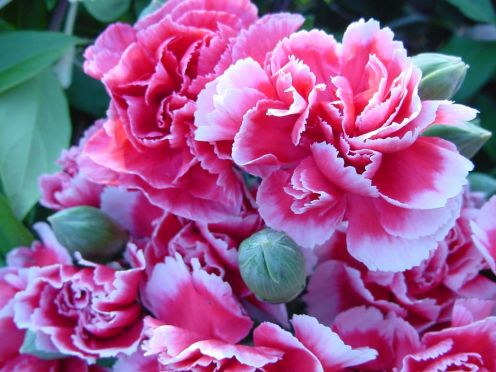
Plants, like all living things have basic, minimum requirements to sustain them. Generally, they are food, water and a suitable environment. But if you want them to thrive you need to get more specific. One of the best things to do is look around your neighborhood and see what kinds of plants look great. It means they love your local conditions and are probably easy to grow.
To join the revolution for bigger yields, check out the biggest buds on the web!
With real estate, the 3 key things to remember are location, location, location. With plants it’s preparation, preparation, preparation! Your plants will thrive if you take care of the basics before bringing them home. You need to make sure your soil is enriched with organic material, providing ongoing, accessable nutrients.
This will also help with conditioning of the soil, encouraging helpful micro-organisms and creating the correct PH levels. Continue to add organic matter to the soil for as long as you want a healthy garden.
Be sure to plant your new plant(s) in a suitable place for them in your garden. Some plants cannot tolerate full sun. Others need a minimum of five hours sun to do well.
Also, take into consideration the mature size of the plant. If you have a small courtyard planting a seedling that will mature into a large tree could be a costly mistake. Read the label on your plant or ask the nursery staff if you’re unsure.
Watering is essential to keeping your plants healthy and happy. Deep watering once or twice a week(depending on your rainfall and the season), rather than surface watering often is far more beneficial to plants as it encourages them to grow deeper root systems.
Deeper root systems allow plants to access water and valuable nutrients and gives them the ability to withstand longer periods without water. Mulching with organic material is also beneficial to your garden, preventing moisture loss, soil erosion and helping with weed control, while adding organic matter.
Remember to experiment with your garden. That’s the only way to discover what plants love living in your area and those that don’t. Try different things and see what works for you. You could chat with your plants or even try planting with the cycles of the moon.
Children love to be involved with the garden. If they show interest you could offer them a small plot of their own to look after. They will be delighted with their efforts when they see tiny seeds mature into food or flowers, and so will you.
Hydroponics Secrets Ten, Hydroponics Enzymes
http://www.advancednutrients.com presents Hydroponics Secrets featuring Erik Biksa revealing tips and tricks to give hydroponics and organic growers bigger and better yields.
Duration : 0:09:29
To learn more about hydroponics, please subscribe to the best hydroponics newsletter on the web!
Wednesday, September 22, 2010
How to Raise the Strongest Most Beautiful Bulbs

Bulbs are your best bet for success. It’s almost impossible to make a mistake because all the nutrients that the flower needs, are in the bulb. What you may find difficult, is actually choosing which bulbs you want.
This article will help you select healthy bulbs and will give you tips on how to get them ready, from preparing the soil, fertilizing, and planting.
To join the revolution for bigger yields, check out the Growers Underground!
Selecting Healthy Bulbs
The secret to a fantastic flower garden is choosing high-quality bulbs. Make sure that you always buy your bulbs from a reliable source, whether you are shopping from a catalog, outlet or local store. Even if the bulbs are a little more costly, you will save money on the long run, if the source is a good one, than simply searching for the best bargain.
Because the bulb stores the energy in the bulb (in the form of starch,) larger bulbs may produce larger flowers. This does not mean however, that you should buy only large bulbs. Don’t hesitate to buy smaller ones as well from a reliable source. These smaller bulbs may just need a season or two to catch up to the larger ones. If you want to have spectacular blooms this year, then buy the larger bulbs.
If you’re buying your bulbs from a local store, inspect them carefully. They should be firm and not have any cuts, blemishes or spots on them. They should not feel dry or light, but more on the heavy side for their size. The basal plate (where the roots emerge) should be solid and firm. It’s okay for the bulbs to have loose skin or little nicks. This would not affect their development in any way.
Getting Ready
It’s always important to choose the right spot for your bulbs, whether it be inside or outside. You probably know about the differences in planting in the garden; how certain plants will thrive better under certain conditions than others.
When you select your location for your new bulbs, try to think about its needs and where it may do best. Don’t forget that even a few feet can make a huge difference with levels of light. What may be suitable lighting at the edge of your shrubs may not be suitable over by the corner of your house, even if it’s only a small jog away.
Preparing the Soil
Except for Siberian irises, most bulbs prefer loose, porous soil because they need to have good drainage. If your soil does not drain well, improve it by adding nutrients, raising the beds, or installing drain lines.
Almost any soil can benefit from organic materials, especially sandy and heavy clay soils.
Fertilizing
Mix bone meal or superphosphate into the soil at the bottom of each planting hole. Because phosphorus does not move easily; it must be planted deep enough to allow the roots to reach it.
Planting
Try to plant your bulbs as soon as you can when the weather permits and is suitable for planting. If you can’t plant them right away, store them in a cool place such as your refrigerator. Never store them in closed bags as they might rot. Bulbs need to breathe!Open the bags or place them instead in paper ones.
Most bulbs are planted at a depth three times their diameter. It’s easier if you dig up a larger area at the proper depth, set them inside the hole, and then cover them.
How to Build Hydroponics Ebb and Flow
EBB and Flow Advantages over DWC (deep water culture) are easy to move plants around, change resovior, rotate plants, set them outside unit.
To learn more about hydroponics, please subscribe to the best hydroponics newsletter on the web!
Subscribe to:
Posts (Atom)
